Water retention
The porous structure absorbs water and releases it gradually, reducing irrigation frequency by up to 30% and keeping moisture where roots need it.

Natural mineral · Clinoptilolite · Mined & processed in Greece
Natural Thracean Zeolite is a clinoptilolite-rich mineral mined and processed in Greece. It holds water and nutrients in the root zone, improves soil structure and can help reduce input costs — from tomato fields to date-palm groves.
Indicative figures — actual results depend on soil, crop, climate and application method.
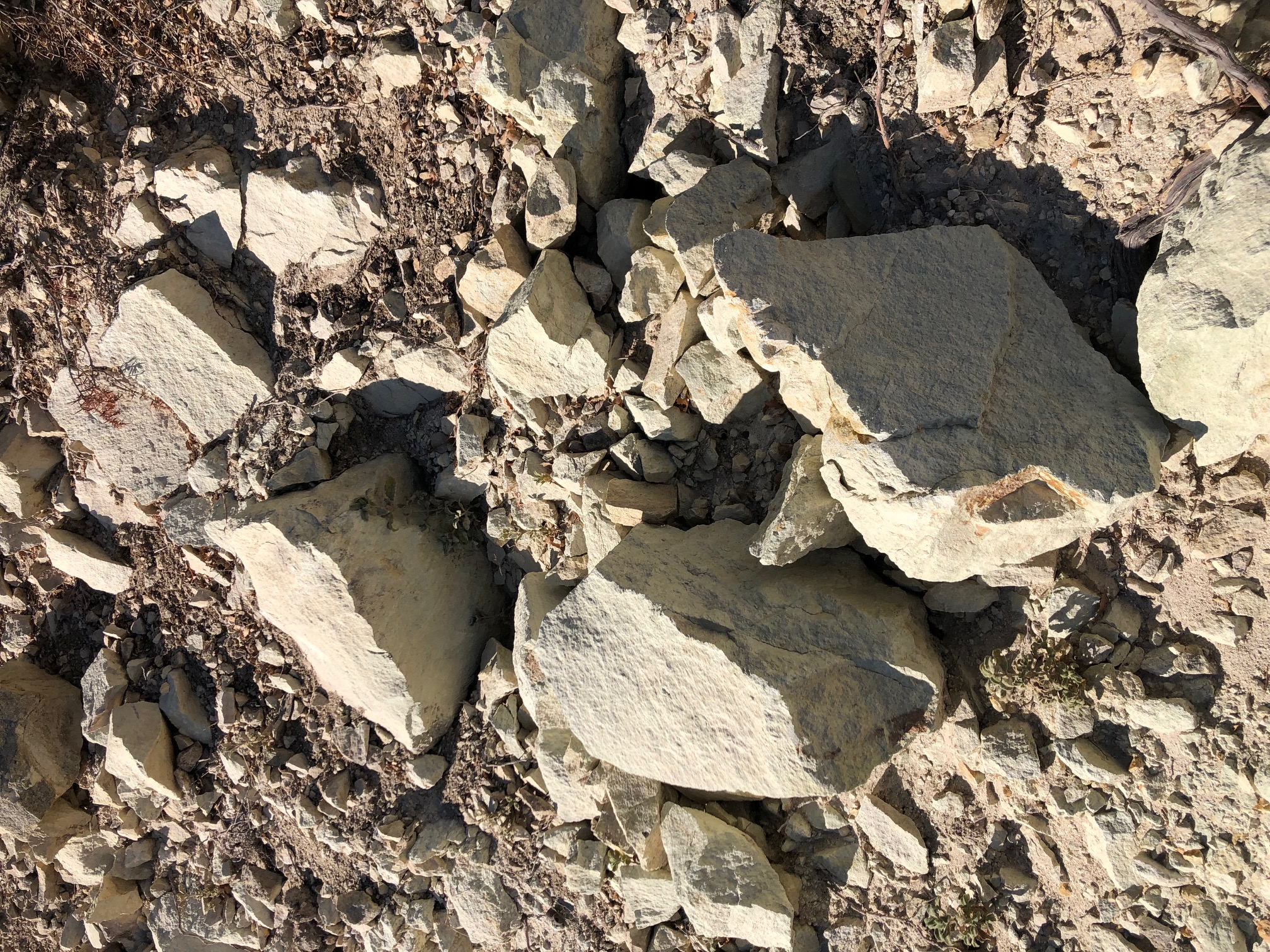
What is zeolite
Natural Thracean Zeolite is a crystalline, hydrated aluminosilicate mined and processed in Greece under strict quality control. It is rich in clinoptilolite — one of the most effective zeolite types in agriculture.
Its highly porous structure provides a large surface area for cation exchange and water storage. It absorbs water and slowly releases it to the roots, improves aeration, captures excess ammonia to help prevent root burn, and holds nutrients in the root zone so fertilizer works longer.
Product & specifications
A clinoptilolite-rich natural zeolite, mined and processed in Greece — supplied micronised or granular. Key figures below are backed by independent lab reports.
Typical / indicative values for a natural mineral product — actual figures vary by batch and grade. Full certificates and lab reports are on the certificates page.
Why it works
Purity and cation exchange capacity (CEC) are the two parameters that define zeolite quality — and the focus of Thracean Zeolite.
The porous structure absorbs water and releases it gradually, reducing irrigation frequency by up to 30% and keeping moisture where roots need it.
High CEC retains nitrogen, potassium, calcium and magnesium, releasing them slowly for steady growth and far less leaching.
Loosens clay soils and helps sandy soils hold moisture, improving aeration and encouraging deeper, healthier roots.
Helps absorb excess ammonia to reduce the risk of root burn and supports beneficial micro-organisms in the root zone.
More consistent moisture and nutrient supply can support larger fruit, fewer deficiencies and a better-quality harvest.
One application can stay active in the soil for several years — economical, and safe to store and transport.
Benefits depend on soil, crop, climate and application method — indicative results may vary.
In the field
Indicative methods across four crops. Dosages are starting points only — confirm the final dosage with a soil analysis and your agronomist's recommendation, and note that results vary with soil, crop, climate and application method. Zeolite is a natural mineral soil conditioner that holds and releases water and nutrients — not a fertiliser, pesticide or plant-protection product.
Indicative dosages — a starting point, not a substitute for a soil analysis and your agronomist's recommendation.
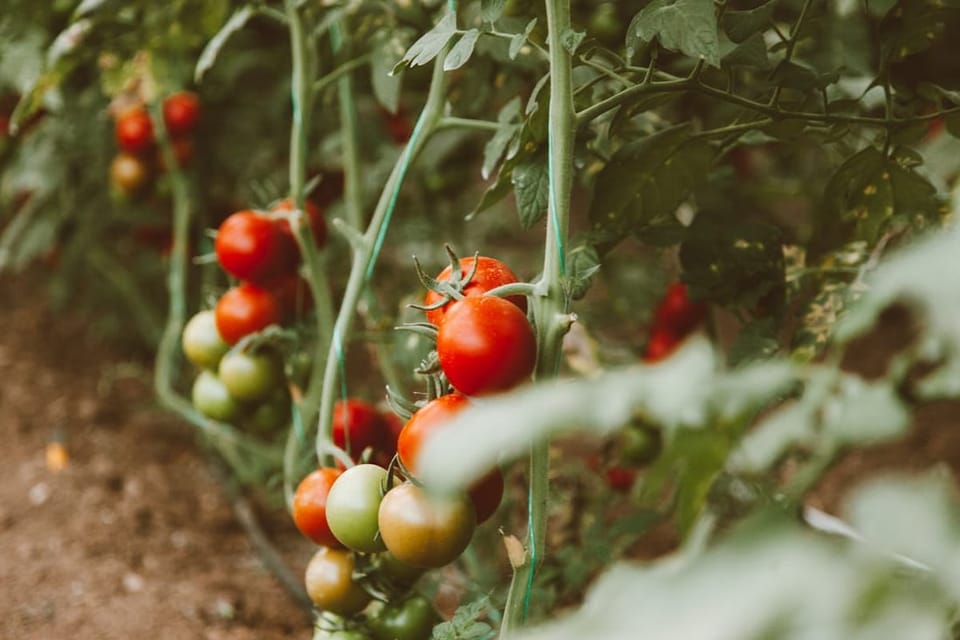
Tomatoes have high water and nutrient needs. Zeolite helps hold water and nutrients in the root zone, which can lower input costs; steadier soil moisture may also help reduce disorders linked to irregular watering, such as blossom-end rot.
Greener lawns with less water and fertilizer runoff — ideal for public parks and high-traffic areas.
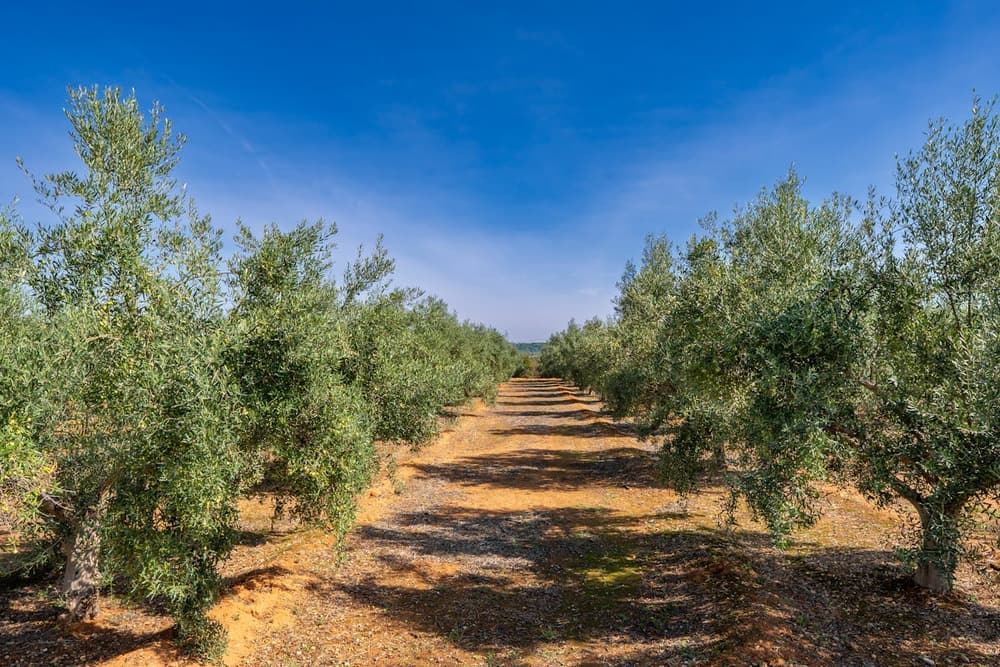
May help lower water, fertilizer and labour costs while supporting oil quality — with a long-lasting effect in the soil.
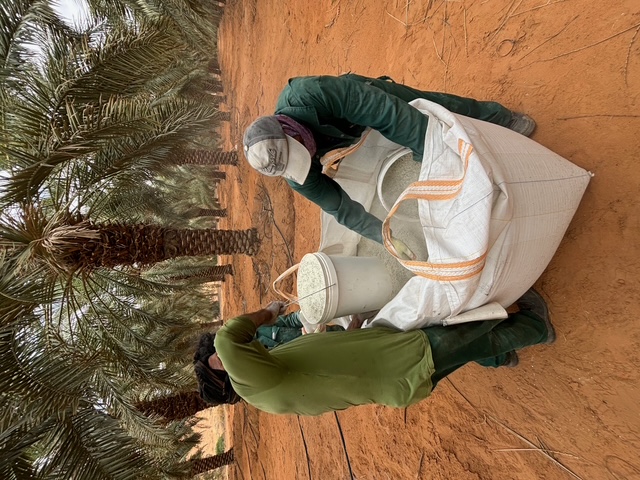
Field-tested in Saudi Arabia: a zeolite ring around each palm held more irrigation water in the root zone and, in a controlled trial, was associated with higher premium and grade output.
The economics
Indicative per-hectare reductions reported from natural zeolite in agriculture. Actual results depend on soil, crop, climate and application method.
Illustrative example: at $100/ha per month on irrigation, a 30% reduction would save ≈ $360/ha each year. Zeolite typically costs about $250–500/ha and can stay active in the soil for several years.
Executive assessment
A controlled, sensor-based comparison in a Saudi date-palm operation framed zeolite as a controlled water buffer — not a flushing input.
less deep-water movement below the root zone (deep/active ratio 1.187 → 0.947).
lower sensor-to-sensor variability (spread 0.085 → 0.026) — more uniform watering.
shift from movement-driven to retention-driven soil, with better buffering capacity.
| Kholas Sensor | |||
|---|---|---|---|
| S.no | Category | No Zeolite — Sprayer Qty — kgs | Zeolite — Sprayer Qty — kgs |
| 1 | Kholas Premium Jumbo | 43.3 | 41.2 |
| 2 | Kholas Premium Large | 12.1 | 3 |
| 3 | Kholas Rutab | 6.65 | 8.32 |
| 4 | Kholas Grade B | 5.05 | 9.6 |
| 5 | Kholas Grade C | 2.1 | 2.5 |
| 6 | Un-Ripe (بسر) | 23.04 | 31.85 |
| Khidri Sensor | |||
|---|---|---|---|
| S.no | Category | No Zeolite — Bubbler Qty — kgs | Zeolite — Sprayer Qty — kgs |
| 1 | Khidri Special | 18.8 | 29.2 |
| 1 | Khidri Premium Jumbo | 11.4 | 13.9 |
| 2 | Khidri Premium Large | 2.4 | 3.4 |
| 3 | Khidri Rutab | 3.5 | 5.68 |
| 4 | Khidri Grade B | 1.4 | 1.6 |
| 5 | Khidri Grade C | 2.3 | 3.3 |
| 6 | Waste | 0.4 | 0.5 |
From quarry to field
Extracted in Thrace and processed in Meleti, Rodopi — then applied in fields across Greece and the Gulf.
From the quarry in Thrace to crushing and grading in Meleti, Rodopi.
Zeolite applied across orchards and groves — held in the root zone where it works.
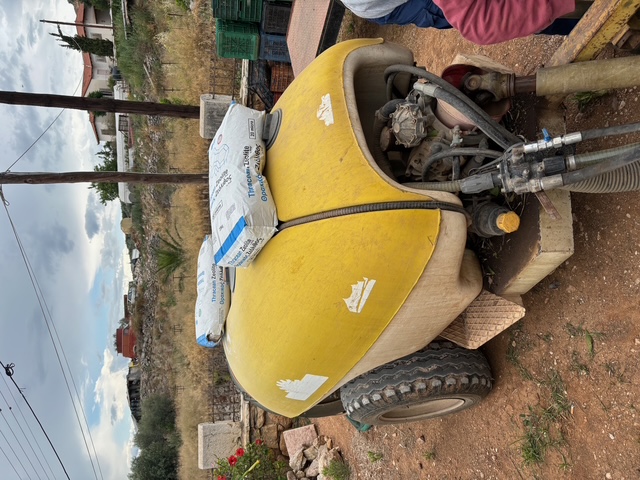
Micronised zeolite applied as a foliar spray — a fine mineral particle-film coating on leaves and fruit.
Footage from the ground
Short clips from the quarry, the processing line and field application.
Get in touch
Natural clinoptilolite zeolite — mined and processed in Greece.
Tell us about your crop and what you need — product information, technical specifications, pricing or samples — and our team will get back to you.
Prefer email? Write to us at
thraceanzeolite@thraceanzeolite.com
Independently verified
SGS, Q-Lab, Technical University of Crete and an EN ISO 9001:2015 quality system. See all reports →






We use only strictly necessary cookies to keep the site working — no analytics, advertising or tracking cookies of any kind. Read more in our Cookie Policy.